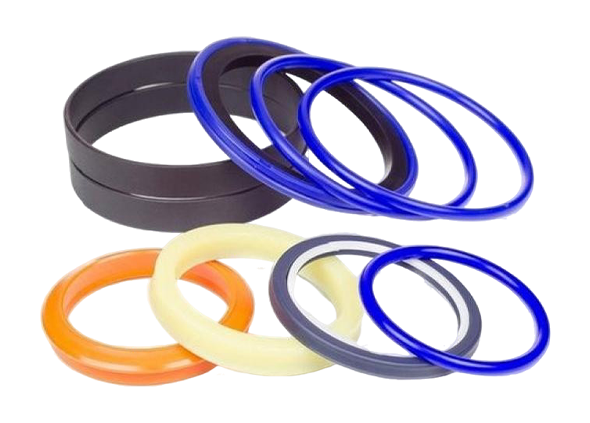
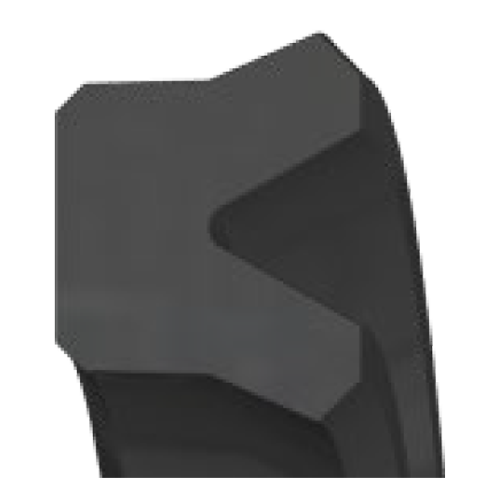
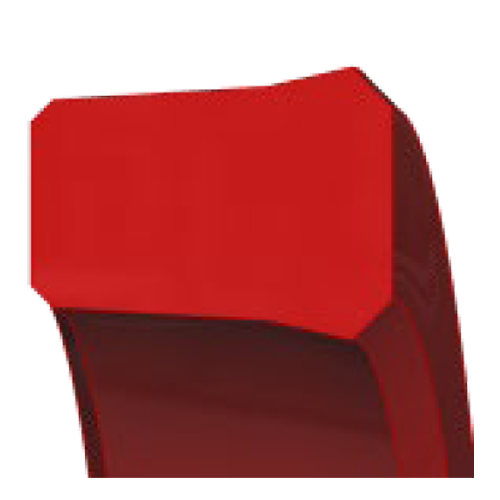
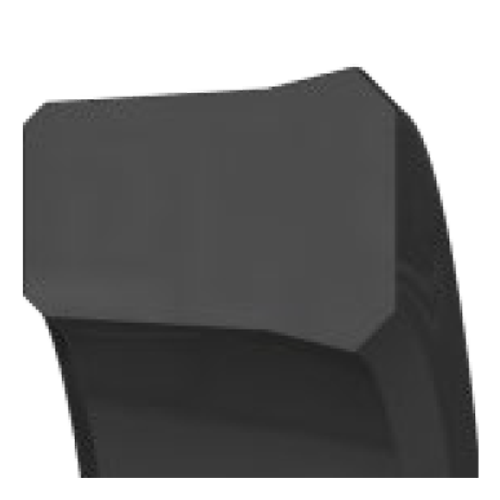
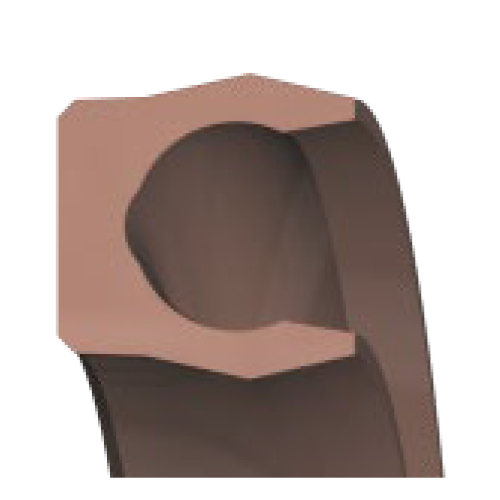
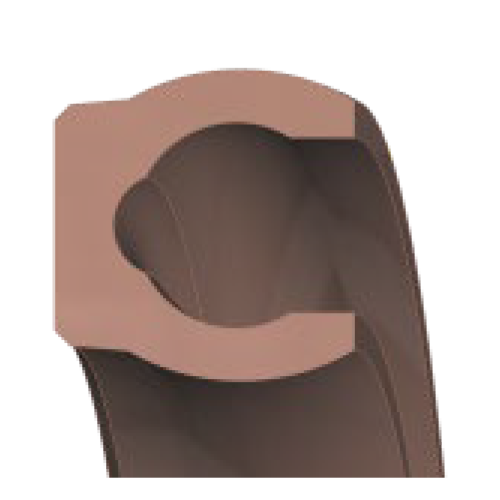
Symmetric Seals for Hydraulic and Pneumatic Applications
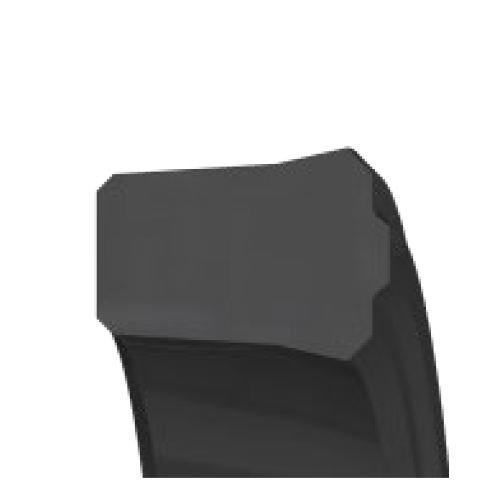
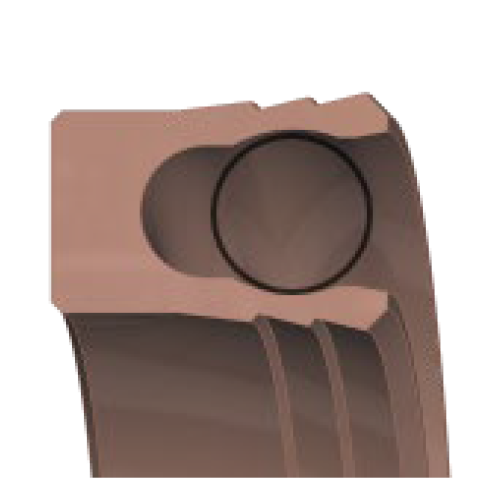
Symmetric seals, also known as bi-directional piston seals, are engineered to perform reliably regardless of the direction of pressure or movement. This versatile design simplifies installation and enhances efficiency in various hydraulic piston seal types used in both hydraulic and pneumatic systems. Their balanced construction allows for effective sealing whether pressure is applied from one side or both, making them ideal for symmetric seals for double acting pistons.
Common piston seal types featuring symmetric designs include:
U-Cups/U-Rings
Many U-cup models inherently offer symmetric sealing capabilities.
Compact Seals
Certain compact seal designs deliver reliable symmetric sealing performance.
Specialized Lip Seals
Lip seals crafted with specific profiles to ensure effective symmetric sealing.
O-Rings
Often function as symmetric seals in select applications.
Materials
Nitrile Rubber (NBR)
A common and cost-effective choice for general-purpose applications.
Viton (FKM)
For higher temperature and chemically aggressive environments.
Polyurethane (PU)
For applications requiring good abrasion and tear resistance.
Silicone
For applications requiring flexibility and temperature resistance.
Applications
Symmetric Seals seals are essential in a wide range of hydraulic and pneumatic systems
Hydraulic Cylinders
Especially in double-acting cylinders where pressure is applied to both sides of the piston.
Pneumatic Actuators
In systems with reciprocating or oscillating motion.
Valves
Where sealing is required in both directions.
Key Features and Benefits
Bi-Directional Sealing
Seals effectively in both directions, simplifying design and installation.
Versatility
Suitable for a wide range of applications with reciprocating or oscillating motion.
Simplified Installation
No need to worry about seal orientation during installation.
Reduced Inventory
One seal can often replace two different seals (one for each direction) in some applications.
Selecting the Right Symmetric Seal
Operating Pressure
The maximum pressure the seal needs to withstand.
Fluid Compatibility
The type of fluid or gas the seal will be in contact with.
Temperature Range
The range of temperatures the seal will be exposed to.
Speed of Movement
The speed of the reciprocating or oscillating motion.